
Pitched roofs lose significant heat through poorly insulated loft spaces. Pitched roof insulation — installed between or under rafters — keeps your home warmer and reduces energy bills.
Reduce heat loss through the roof. Save £200-£400 per year on heating.
Consistent temperatures throughout your home. No more cold rooms or draughts from upstairs rooms.
Eligible homeowners may receive fully funded pitched roof insulation.
Properly installed insulation with ventilation prevents roof space condensation, protecting timbers from rot.
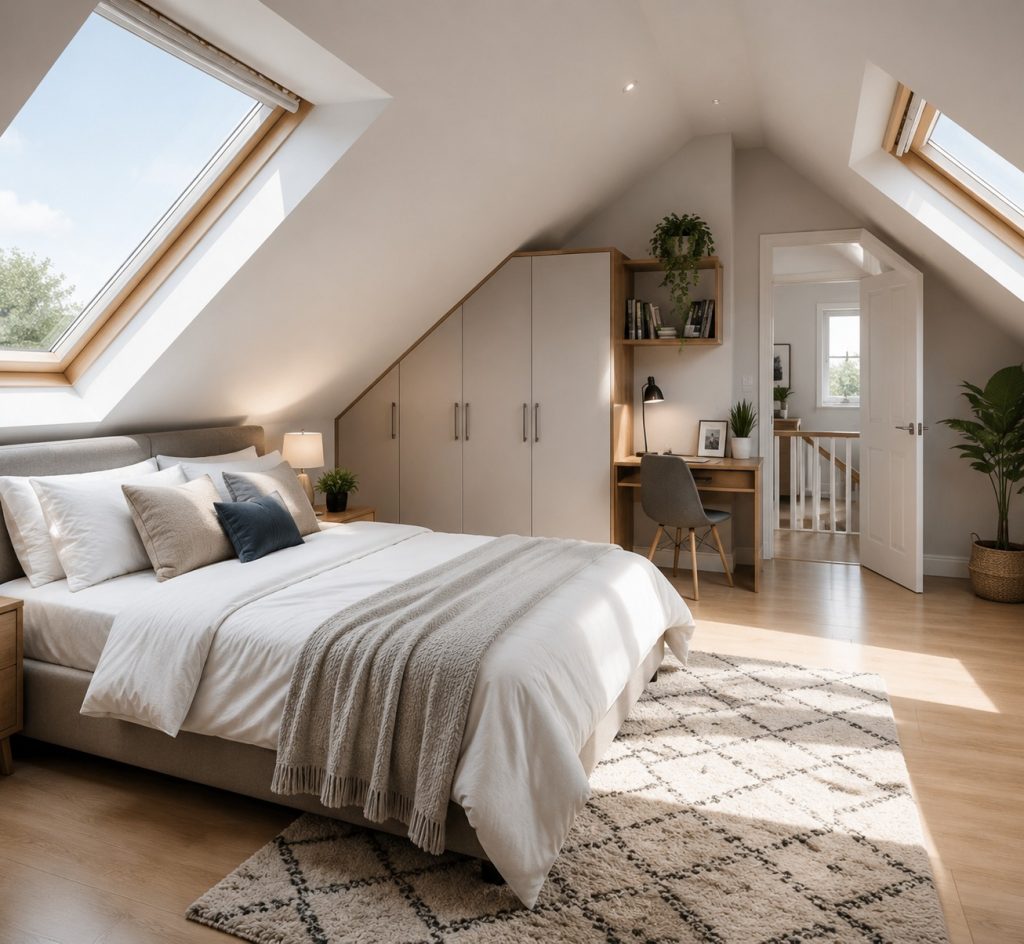
Insulation installed between roof rafters. Leaves rafter depth visible. Suitable for lofts used for storage or occasional access. Requires 100mm-150mm rafter depth.
Continuous insulation layer installed across rafters (below rafters). Eliminates thermal bridging at rafters. Best for loft conversions or habitable spaces. Reduces room height by 50-100mm.
Maximum thermal performance. Both between and under rafters for U-values as low as 0.15 W/m²K. Best for highest energy efficiency.
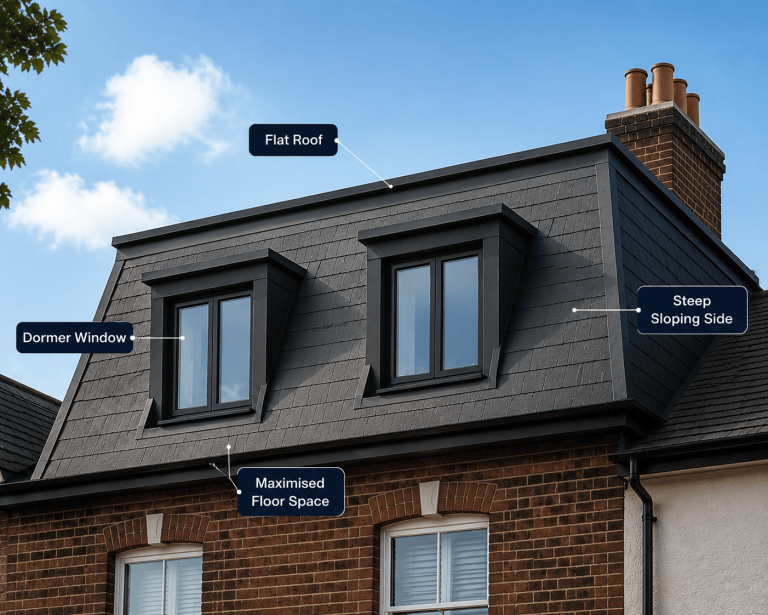
Choosing the right insulation material for pitched roofs is essential for achieving optimal thermal performance, moisture control, and long-term durability. The choice depends on whether insulation is installed between rafters, under rafters, or in combination.
PIR boards offer excellent thermal efficiency in a slim profile, making them ideal for modern pitched roof upgrades where space is limited and high performance is required.
Mineral wool is widely used due to its affordability, fire resistance, and acoustic benefits. It is most suitable for standard loft conversions and basic energy upgrades.
Phenolic insulation provides one of the best thermal performances available, allowing high efficiency with minimal thickness—ideal for space-restricted roof designs.
Spray foam expands to fill gaps and irregular spaces, creating an airtight seal that reduces heat loss and draughts. It is particularly useful for older or uneven roof structures.

Proper ventilation is critical for pitched roof insulation. Without it, condensation causes damp and rot in roof timbers.
We assess and design appropriate ventilation for your roof type. Options include:

We assess your roof construction, rafter depth, ventilation, and access.
We specify insulation type, thickness, and ventilation requirements.
Our team completes:
For between rafter insulation:
For under rafter insulation:
The cost of pitched roof insulation in Manchester depends on the property type, roof size, insulation method, and whether insulation is installed between or under rafters. Most homes qualify for ECO4 funding, which can significantly reduce or fully cover installation costs for eligible households.
ECO4 funding may cover up to 100% — your cost may be £0 if eligible
Ideal for typical Victorian and Edwardian terraced homes. This is the most common and cost-effective insulation upgrade option in Manchester.
ECO4 funding up to 100% available — your cost may be £0 if eligible
Suitable for medium-sized homes with larger roof areas, providing improved thermal efficiency and reduced heat loss through roof spaces.
ECO4 funding up to 100% available — your cost may be £0 if eligible
Best for larger properties where pitched roof areas are extensive and heat loss is higher, making insulation highly cost-effective.
| Property Type | Typical Cost | ECO4 Funding | Your Cost (If Eligible) | Best For |
|---|---|---|---|---|
| Terraced House | £800–£1,500 | Up to 100% covered | £0 | Victorian & Edwardian terraces |
| Semi-Detached House | £1,000–£2,000 | Up to 100% covered | £0 | Medium-sized family homes |
| Detached House | £1,500–£3,000 | Up to 100% covered | £0 | Larger homes with higher heat loss |
Note : Costs are estimates only and may vary depending on property condition, size and project requirements.Final pricing will be confirmed after a site survey and written quotation.
Choosing the right installer for pitched roof insulation is essential to ensure proper ventilation, energy efficiency, and long-term roof performance. At Compliant Retrofits, we deliver fully compliant, high-quality insulation systems designed specifically for UK housing stock.
We carefully assess roof ventilation to prevent condensation, damp buildup, and timber decay. Proper airflow design ensures your insulation works efficiently without trapping moisture inside the roof space.
We manage the full ECO4 process, including eligibility checks, documentation, and application support. This helps eligible homeowners access fully funded or heavily subsidised insulation upgrades with minimal hassle.
We only use certified, BBA-approved insulation materials that meet UK building regulations. This ensures long-term durability, thermal efficiency, and compliance with national standards.
All work is carried out by trained professionals with a focus on accuracy, safety, and compliance. We ensure insulation is correctly fitted between or under rafters for maximum energy performance.
We provide a no-obligation property assessment to evaluate your roof structure and recommend the most suitable insulation system for your home.
A: Between rafter fits between existing rafters, leaving rafters visible as thermal bridges. Under rafter is a continuous layer across the rafters, eliminating thermal bridging and providing better performance.
A: Yes. Proper ventilation prevents condensation and rot. We assess and design ventilation for your roof type.
A: For between rafter insulation, yes — storage is possible on the ceiling joists. For under rafter insulation, the room height is reduced, but the entire space becomes habitable.
A: Yes, if you receive qualifying benefits or meet ECO4 Flex criteria. Contact us for a free eligibility check.