
A loft conversion is one of the most cost-effective ways to increase living space and boost property value in Manchester. Whether you need a bedroom, office, gym, or playroom, your unused loft can be transformed into a fully functional living area.
A professionally completed loft conversion can potentially increase property value, depending on location, design quality, and market conditions. Many homeowners choose loft conversions as a long-term investment in usable space and property appeal.
Moving home can often involve significant costs such as estate agent fees, legal expenses, stamp duty, and removal charges, which may vary depending on the property and location.. A loft conversion allows you to stay in your neighbourhood while gaining extra space.
Most loft conversions fall under permitted development, meaning no planning permission is needed (subject to conditions), making the process faster and simpler.
Modern loft conversions with improved insulation may help reduce heat loss and contribute to lower energy consumption, depending on the existing property condition and usage patterns.
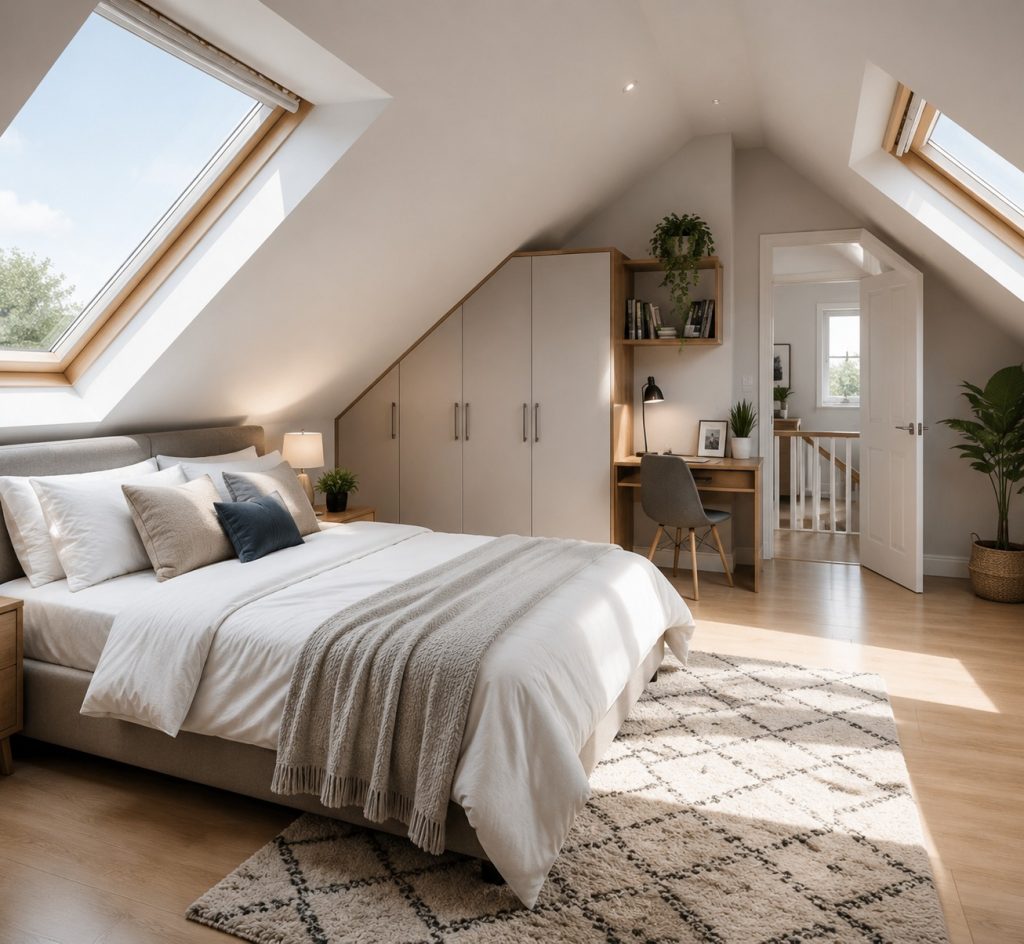
The simplest and most cost-effective option. Roof windows (Velux or similar) are installed within the existing roof slope. The existing roof shape is maintained. Ideal for lofts with sufficient headroom (2.2m+).
A dormer projects from the roof slope, creating additional floor space and headroom. The most popular choice for semi-detached and detached homes in Manchester.
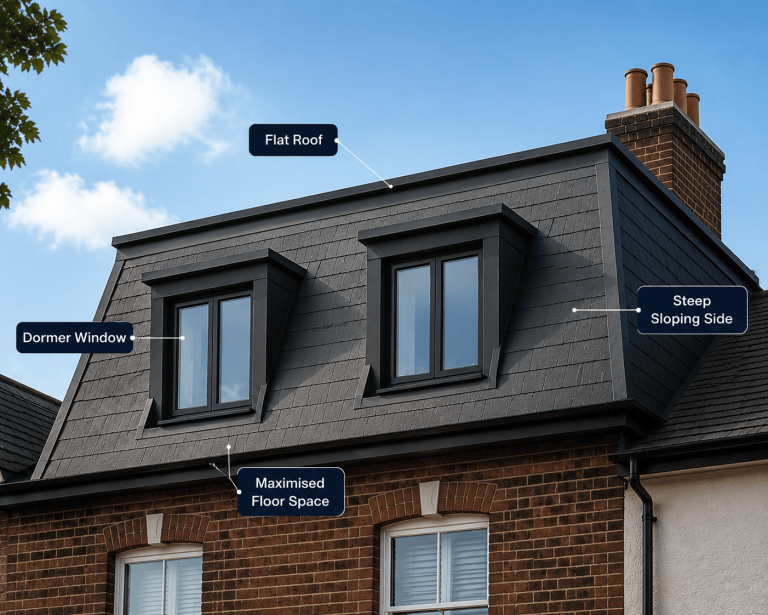
A full roof structure change that creates a flat roof with a steep sloping side. Maximum space creation, typically requiring planning permission. Most common in terraced houses in conservation areas.
For detached and semi-detached homes with hipped roofs. The sloping side is extended to create a vertical gable wall, significantly increasing floor space.
Combines rear and side dormers. Creates maximum floor space, popular for Victorian terraced houses with rear extensions.
| Conversion Type | Best For | Timeline | Planning Permission | Typical Cost |
|---|---|---|---|---|
| Roof Light (Velux) | Lofts with good headroom | 4–6 weeks | Usually not required | £15,000 – £25,000 |
| Dormer Conversion | Extra space & headroom | 6–8 weeks | Usually permitted development | £30,000 – £50,000 |
| Hip to Gable | Semi-detached & detached homes | 6–10 weeks | Usually permitted development | £40,000 – £60,000 |
| Mansard Conversion | Maximum space gain | 8–12 weeks | Usually required | £50,000 – £80,000 |
| L-Shaped Dormer | Victorian terraces | 8–12 weeks | Often required | £45,000 – £70,000 |
Note : Costs are estimates only and may vary depending on property condition, size and project requirements.Final pricing will be confirmed after a site survey and written quotation.

We visit your property, assess your loft space, measure headroom, check the roof structure, discuss your goals, and provide an estimated-price quote. We will also advise on the best conversion type for your property.
We create detailed architectural drawings, handle any planning permission applications, and ensure Building Regulation compliance. We also advise on party wall agreements if required for terraced or semi-detached homes.
Our team completes:
You receive a finished, certified loft conversion ready to use. All work complies with Building Regulations and PAS 2035 where applicable. We provide:
All loft conversions must comply with Building Regulations covering:
Most loft conversions are permitted development, subject to:
You may need planning permission for:
For terraced and semi-detached homes, you may need a Party Wall Agreement with your neighbours. This covers:
We advise on party wall requirements and help you serve notices.
If your Manchester property is listed (Grade I, II*, or II), you will need Listed Building Consent for most loft conversions. We specialise in traditional buildings and can guide you through the consent process.
Your quotation will clearly identify the included work, exclusions and provisional items. Any necessary variation will be explained and approved before additional work is undertaken.
We handle everything from design to completion — architecture, structural engineering, planning permission, building control, and all trades. You have one point of contact for your entire project.
Where insulation or energy efficiency upgrades are included as part of a wider home improvement project, work may be designed in line with relevant UK Building Regulations and, where applicable, PAS 2030/2035 retrofit standards.
Any government-backed funding schemes such as ECO4 are subject to eligibility checks and apply only to qualifying energy efficiency measures, not full loft conversion works.
No-obligation advice and quote. We visit your property, assess your loft, discuss your goals, and provide a estimated price.
We know Manchester properties — Victorian terraces (Levenshulme, Burnage), 1930s semis
All work complies with Building Regulations. We provide full certification on completion.
All work comes with full guarantees and warranties. We use structural engineers, certified electricians, and Qualified plumbers and Gas Safe registered engineers where gas work is required.
No obligation. We assess your loft, advise on the best conversion type, and provide a estimated price quote.

A: Simple roof light conversions take 4-6 weeks. Dormer conversions take 6-8 weeks. Mansard or hip to gable conversions take 6-10 weeks.
A: Most loft conversions do not require planning permission if they fall within permitted development limits. We advise on your specific property. Listed buildings and conservation areas (e.g., parts of Didsbury, Chorlton, Hale) may require permission.
A: Yes. All our work complies with Building Regulations, and we arrange the necessary inspections and certification. We cover structure, fire safety, insulation, electrics, ventilation, and means of escape.
A: Yes. Loft conversions are ideal for bedrooms (master suites with en-suite), bathrooms, home offices, gyms, cinemas, or playrooms. We can add en-suite bathrooms, shower rooms, or wet rooms.
A: Yes. A quality loft conversion typically adds 15-20% to your property’s value. In Manchester, a loft conversion can add £40,000-£80,000 depending on property type and location.
A: No, if installed correctly. We include vapour control layers, insulation, and ventilation (MVHR or extract fans) to prevent condensation. We also check existing roof condition before starting.
A: Yes, but you may need planning permission. We specialise in traditional buildings and heritage conservation. We can advise on appropriate materials (e.g., slate, tile hanging) to match the conservation area.
A: Around 2.2 metres at the highest point is commonly used as an initial feasibility guide. However, usable space, staircase position and Building Regulations requirements must all be assessed before confirming that a loft is suitable for conversion.